
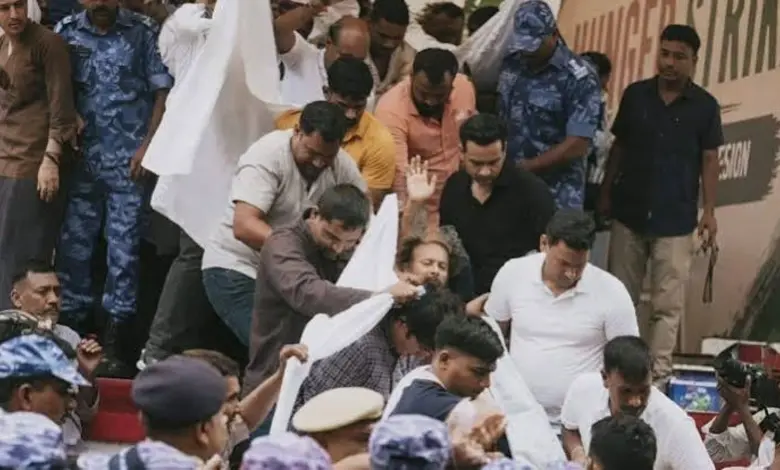
New Delhi: Climate activist and education reformer Sonam Wangchuk was admitted to Delhi’s Safdarjung Hospital on Saturday after completing 20 days of an indefinite hunger strike at Jantar Mantar, where he has been leading a protest demanding accountability over the alleged NEET paper leak and broader reforms in India’s examination system.
The decision to move Wangchuk came after doctors monitoring his condition warned that his health had deteriorated following nearly three weeks without food. Delhi Police said the hospitalisation was carried out on medical advice and in compliance with directions issued by the Delhi High Court, which had asked authorities to keep a close watch on his health and intervene if required. Reports said he was taken to VMMC and Safdarjung Hospital in the early hours of Saturday.
Despite being shifted to hospital, Wangchuk has made it clear that he is not ending his agitation. Through his supporters, the activist said his fast would continue and that the transfer was a medical necessity, not a withdrawal from the movement.
The protest, which began earlier this month at Jantar Mantar, has drawn students, teachers, civil society groups and citizens from across the country. Demonstrators have demanded a transparent investigation into alleged irregularities in the NEET examination, stronger safeguards to prevent future paper leaks and greater accountability from the Centre. One of the key demands has been the resignation of Union Education Minister Dharmendra Pradhan.

Over the past few days, concerns over Wangchuk’s health had steadily grown. Doctors were conducting regular check ups as required by the court, with reports indicating significant weight loss and increasing weakness. Medical experts reportedly advised that continuing the fast without hospital care could pose a serious risk.
The activist’s hospitalisation has sparked fresh political reactions. Supporters gathered at Jantar Mantar claimed Wangchuk was taken away against his wishes, while some alleged that police also dispersed protesters from the site. Delhi Police, however, maintained that the move was solely aimed at protecting his health and ensuring compliance with the High Court’s directions.
Even before he was admitted, Wangchuk had repeatedly said he would continue his protest until the government responded to the demands of students and engaged in meaningful dialogue. Organisers of the campaign have also announced plans for a march towards Parliament, signalling that the movement will continue despite the activist’s hospitalisation.
The hunger strike has received support from several prominent voices in public life. Writers, filmmakers and members of civil society have appealed to Wangchuk to end his fast, expressing concern over his deteriorating health while also urging the government to address the issues raised by the protesters through dialogue.
Known internationally for his work in sustainable education and environmental conservation in Ladakh, Wangchuk has often used peaceful forms of protest to draw attention to public issues. This latest fast has once again placed him at the centre of a national debate this time over the credibility of India’s competitive examination system and the growing demand for institutional accountability.
As of Saturday evening, Wangchuk remained under medical observation at Safdarjung Hospital. While his condition continues to be monitored by doctors, his supporters insist the protest is far from over, saying the movement will continue until its demands are addressed.
ALSO READ: Delhi HC Asked To Intervene As Sonam Wangchuk Hunger Strike Enters Day 17