
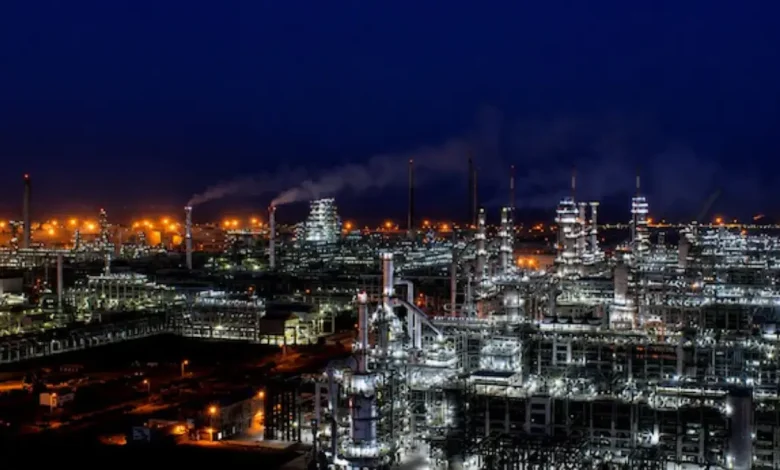
New York : The renewed military confrontation between the US and Iran has once again brought the Strait of Hormuz into focus, with fresh American strikes, Iranian retaliation, repeated threats to close the strategic waterway, and another attack on a merchant vessel carrying Indian seafarers highlighting the vulnerability of one of the world’s busiest energy chokepoints.
The changes, prompted by disruptions witnessed during the previous Gulf crisis, have made India better prepared to deal with fresh geopolitical shocks, although officials acknowledge that the effort to strengthen energy security remains a work in progress. Following the supply disruptions in March, state-owned refiners broadened their sourcing beyond the Middle East, ramping up imports from Russia, the United States, West Africa and other regions while seeking more flexible procurement arrangements. The strategy aims to reduce dependence on any single supplier and cushion India against disruptions similar to those currently unfolding in the Gulf.
Refiners have reportedly scaled back their reliance on long-term agreements with traditional Middle Eastern producers and are increasingly turning to spot purchases and broader supply contracts with global trading houses sourcing crude from multiple regions. India imports nearly 90% of its crude oil requirements—around 5 million barrels per day—making it one of the world’s most import-dependent energy consumers, according to Reuters. For decades, much of this oil came through long-term contracts with major Gulf producers such as Saudi Arabia and Iraq, which guaranteed fixed monthly supplies linked to international crude benchmarks.
India’s efforts to reduce strategic vulnerabilities have since expanded beyond energy security. Commerce and Industry Minister Piyush Goyal is currently visiting Spain, Belgium and Finland to deepen partnerships in renewable energy, semiconductors, advanced manufacturing, clean technologies and critical supply chains, reflecting New Delhi’s broader push to diversify economic partnerships. India has also steadily increased its dependence on Russian crude since 2022 after Moscow began offering steep discounts following Western sanctions over the Ukraine war.



Despite the increase in Russian imports, Indian refiners continue to diversify their supplier base amid concerns over Russia’s own export capacity. Ukraine has stepped up drone strikes on Russian refineries, oil depots and export terminals in recent months, disrupting fuel supplies and raising questions about Moscow’s ability to sustain high export volumes. Reuters reported that fuel shortages have emerged in parts of Russia and Russian-occupied territories, with petrol rationing introduced in several regions.
Read Also : US-Iran War Intensifies : Tehran Launches Attacks Across Gulf After US Strikes