
‘They May Kill Me’: Sheikh Hasina Says She Will Return to Bangladesh in December, Surrender Before Court
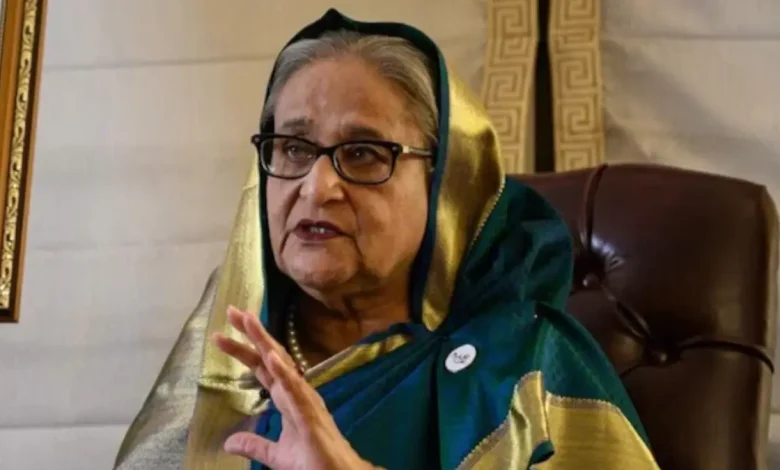
Former Bangladesh Prime Minister Sheikh Hasina, who was sentenced to death in absentia by a tribunal in her home country, has said she and senior leaders of the now-outlawed Awami League plan to return from exile in India around December and surrender before the courts despite the risk to their lives.
Speaking in a nearly hour-long telephone interview with Reuters, the 78-year-old leader said she was prepared to be arrested or even killed but believed she had to return to Bangladesh.
Hasina Says She Will Return Despite Death Sentence
Hasina, who has been living in India since August 5, 2024, after leaving Bangladesh following weeks of anti-government protests, said she and senior Awami League colleagues intended to return around December.
“They may arrest me on my return, they may even kill me,” Hasina told Reuters.



“Still, I have to go. My party leaders and workers are being subjected to tremendous repression. If death comes, I want it to come on my own soil, where my parents are buried and where their blood was shed,” she added.
The statement marks the first time Hasina has publicly provided a timeline for her return and said that other senior Awami League leaders would also surrender before the courts.
Also Read:Spain Wildfire 12 Dies, 23 Missing; Foreign Nationals Among Victims as Death Toll May Rise
According to Reuters, former Home Minister Asaduzzaman Khan Kamal, who also faces a death sentence, is among those expected to return.
Living in India Since Leaving Bangladesh
Hasina has remained in India since fleeing Bangladesh in August 2024 after a student-led mass uprising ended her two-decade tenure as prime minister across multiple terms. The protests turned violent, and she was advised by the army chief to leave the country for her safety.
The move strained diplomatic ties between India and Bangladesh.
In November 2025, Bangladesh’s International Crimes Tribunal sentenced Hasina to death in absentia over her alleged role in the crackdown on the 2024 student-led protests. She has consistently denied the allegations.
Dhaka, first under the interim administration led by Muhammad Yunus and now under the BNP government headed by Prime Minister Tarique Rahman, has repeatedly sought Hasina’s extradition from India.
Hasina told Reuters she had not consulted any foreign government regarding her planned return.
Bangladesh Seeking Extradition From India
“The authorities in Dhaka want to take me back, they are repeatedly sending letters to India seeking to have me sent back,” Hasina said.
“I will go myself,” she added.
India’s Ministry of External Affairs has previously said Bangladesh’s extradition request was under examination as part of ongoing legal and judicial processes.
Responding to questions on the issue in April, MEA spokesperson Randhir Jaiswal said:
“The request is being examined as part of ongoing judicial and internal legal processes. We will continue to engage constructively on the issue with all stakeholders.”
He added that India remained committed to strengthening bilateral ties with Bangladesh and that both countries had agreed to explore proposals to deepen cooperation through bilateral mechanisms.
‘I Believe in Justice’
Hasina said she intended to surrender because she believed the legal process would expose what she described as politically motivated cases against her.
“I believe in justice, and I feel that once proceedings start, it will be clear to the people how farcical the court is — and that I want to prove it,” she told Reuters.
Earlier this year, Bangladesh’s Police Bureau of Investigation recommended dropping an attempted murder case against Hasina and 112 others after investigators said the alleged victim could not be traced and the complaint contained fabricated details. Investigators also said they were under “pressure” despite finding the case “fundamentally unreliable.” The development lent support to the Awami League’s claims of “ghost cases” under the post-Hasina administration.
Hasina declined to reveal the exact date of her return or identify the court where she intended to surrender.
She also said imprisonment did not concern her, noting she had previously been jailed several times during her political career, including under Bangladesh’s military-backed caretaker government in 2007 before returning to power following the 2008 elections.
Hasina said she had been conducting online meetings covering 125 of Bangladesh’s 300 parliamentary constituencies as part of efforts to reorganise the Awami League, which was banned by the interim administration led by Muhammad Yunus.
Reflecting on her two decades in office, Hasina acknowledged that mistakes may have occurred but said the final judgment belonged to the people of Bangladesh.
“When a government works for a long time, mistakes can happen. No government is above error,” she said. “But the right to judge the good and bad, the right and wrong of a government belongs to the people. I leave that judgment to the people.”