
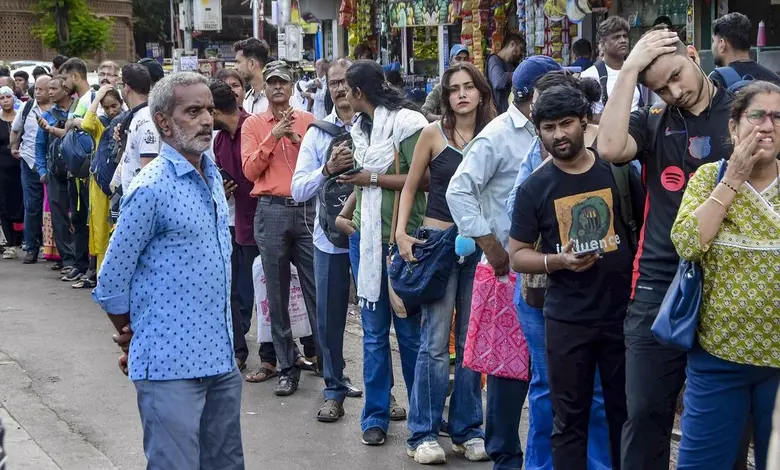
Mumbai’s public bus services remained severely disrupted on Sunday as the ongoing strike by employees of the Brihanmumbai Electric Supply and Transport (BEST) undertaking entered its third day. To support students appearing for the National Eligibility-cum-Entrance Test (NEET) re-examination, authorities arranged nearly 180 special bus trips across the city.
The civic transport body deployed 60 buses on 24 routes to help candidates reach 63 examination centres. Direct connectivity was provided from major hubs such as Kurla, Dadar, Malad, and Mulund. Special services were scheduled primarily between 9 a.m. and 1 p.m., and again from 5 p.m. to 7 p.m. Officials urged students to utilise these buses to ensure they arrived at their centres safely and on time.
Route details for the special services were initially not publicised widely before 10 a.m., which created some inconvenience for planning. Information was released later in the morning following intervention by authorities.
The strike, which began on June 19, has brought regular BEST operations to a near standstill. Commuters have been forced to rely on local trains, Metro services, taxis, and autorickshaws, leading to longer wait times and increased travel costs. Many office-goers chose to work from home, while Metro and suburban rail networks experienced higher passenger loads.

ALSO READ : Mumbai rain: Monsoon Showers Arrive After Being Held Hostage
On the first day of the strike, only 48 buses operated, with some reportedly returning to depots due to obstructions. The following day saw even fewer services, with just four buses on the roads during the morning hours and low attendance among drivers, conductors, and other staff.
The agitation persists despite the government’s invocation of the Maharashtra Essential Services Maintenance Act and an industrial court’s order restraining employees from striking. Notices were issued to participating workers and contractors, under which legal action can be taken. Permanent, temporary, and most wet-lease operator staff have joined the protest.
BEST, which normally runs a fleet of about 2,766 buses and serves around 25 lakh passengers daily, is Mumbai’s second-largest public transport provider after the suburban railway system.
Union representatives have expressed willingness to negotiate but stated the strike will continue until the government addresses key demands. These include merging BEST’s budget with that of the Brihanmumbai Municipal Corporation, implementing Seventh Pay Commission recommendations, clearing dues for retired employees, ending contractual arrangements in transport and electricity operations, and absorbing wet-lease workers into the permanent workforce.
Earlier efforts at dialogue between transport officials and union leaders did not yield a resolution. The situation continues to affect daily mobility across the city while special arrangements aim to safeguard critical needs such as student examinations