
POK Has Its Own President, Prime Minister And Even A Flag. If Its Part Of Pakistan, Why The Separate Identity ?
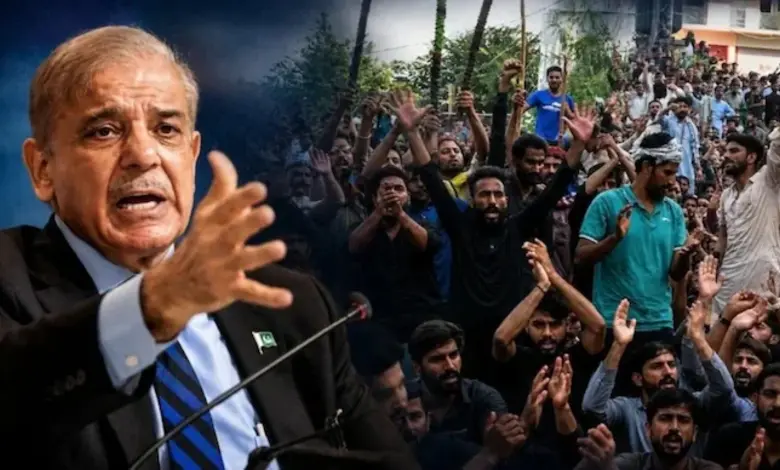
New Delhi: Pakistan occupied Kashmir (POK) has a President. It has a Prime Minister. It has its own Assembly and even a seperate flag.
For many Indians, that raises an obvious question if Pakistan claims administrative control over the territory, why does it need an entirely seperate political setup instead of treating it like one of its provinces ?
The answer lies at the heart of Islamabad’s decades old Kashmir strategy.
A Government Within A Government



Officially called “Azad Jammu and Kashmir” (AJK) by Pakistan, the territory is governed through its own constitutional framework. It has elected representatives, a President who serves as the constitutional head, a Prime Minister who heads the government, and a Legislative Assembly.
On paper, it appears to enjoy a distinct political identity.
But unlike Pakistan’s four provinces, POK has never been formally absorbed into Pakistan. Islamabad has deliberately kept it outside the provincial structure.
That distinction is not merely administrative it is political.
Why Pakistan Never Made POK a Province
If Pakistan were to formally integrate POK as a province, critics argue it would weaken its long standing international position that the entire Jammu and Kashmir region remains a disputed territory awaiting a final settlement.
By keeping POK constitutionally separate, Pakistan can continue projecting the territory as something other than an ordinary part of the country.
In simple terms, the separate President, Prime Minister and flag help sustain the narrative that the region has a unique political status.
Symbolism vs Real Power
Supporters of Pakistan’s approach describe the arrangement as a form of self governance.
Critics see it differently.
They argue that while POK has institutions that resemble those of an autonomous territory, major decisions relating to security, foreign affairs and strategic policy remain heavily influenced by Islamabad.
As a result, opponents often describe the arrangement as more symbolic than substantive a political structure that creates the appearance of autonomy while ultimate authority rests elsewhere.
The Flag That Fuels Questions
One of the most visible symbols of this arrangement is POK’s separate flag.
Unlike Punjab, Sindh or Balochistan, which use Pakistan’s national flag, POK flies its own official flag alongside Pakistan’s.
For supporters, it represents the territory’s distinct status.
For critics, it is part of a broader effort to reinforce the claim that POK is not fully integrated into Pakistan despite being under its control for decades.
What Does India Say?
India’s position has remained consistent the entire former princely state of Jammu and Kashmir, including territories under Pakistani control, is an integral part of India.
Successive Indian governments have referred to the region as Pakistan occupied Kashmir and have maintained that Pakistan’s presence there is illegal.
This is why developments in POK often attract close attention in New Delhi, particularly when questions arise about governance, political rights or constitutional arrangements.
The Real Question
The existence of a President, Prime Minister and separate flag in POK is not a historical accident.
These institutions were created to give the territory a distinct constitutional identity while keeping it outside Pakistan’s provincial framework.
Whether one views that as genuine autonomy or a carefully crafted political arrangement depends largely on perspective.
But one fact remains undeniable if POK were treated like any other part of Pakistan, there would be little need for a separate President, a separate Prime Minister and a separate flag.
And that is precisely why the debate refuses to go away.
ALSO READ: India Slams Pakistan Over PoK Protest Killings, Demands Accountability