
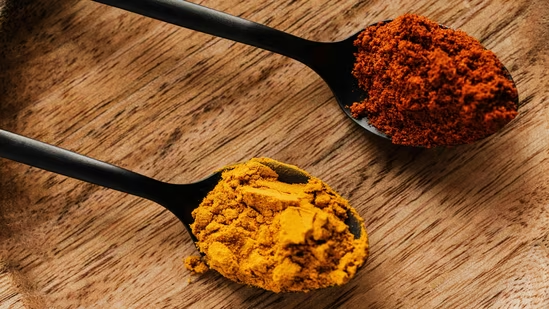
In today’s time, eating healthy food has become as hard as going for a foreign trip. With the increase in the number of health issues around the globe, it has become the need of the hour to consume a balanced-rich diet. However, due to the absence of natural ingredients in the market it has become difficult to survive in the long run. Adulteration in cooking ingredients has increased the risk of a healthy living diet. The drastic shift from fresh powdered spices and other packaged products has likely opened avenues for adulteration to take place.
Taking to Instagram on April 14, Ahana Nazar Hafis, a Qatar based food safety officer and content creator stated, “Food adulteration is the addition of unwanted or foreign substances intentionally or unintentionally to the food.” She shared some easy tests that could be performed to detect adulteration in certain kitchen ingredients. The tests are as follows-
1. Turmeric Test
Turmeric is something that is found in every kitchen. So to know whether the turmeric powder in your kitchen is unadulterated you simply need to follow this step. Ahana suggests that by adding a small amount of turmeric powder to a transparent glass of water and observing carefully. if it releases too much bright colour instantly, it may indicate added artificial dyes,” she stated. For pure turmeric powder, there will be no rapid release of colour into the water, which stays clear as the powder settles.




2. Chilli Powder test
A simple technique to understand whether your chilli powder is pure is not simple. You just have to take a glass of water and add chilli powder if it settles slowly. If it gets rapidly mixed into the water it can be a sign of added synthetic colour.
3. Milk Test
Milk adulteration is done for ages. Ahana suggests if a drop of milk is kept on a smooth, slanted surface , pure milk will flow down the slant leaving behind the trace of white trail whereas if diluted, the milk will move faster without leaving any trail.
4. Tea Powder Test
Tea is the most drinkable beverage enjoyed by many in India. To check whether the tea used at home is pure, Ahana suggested adding a spoonful of tea to cold water. If the water remains colourless, the tea is likely unadulterated. However, If there is a leaching of colour. It suggests that the tea contains added dyes.
The tests suggested are not replacement for lab analysis, they are quick and easy and can be performed at home, shared the food safety officer.
This report is based on user-generated content from social media. Mumbai Samachar English has not independently verified the claims and does not endorse them.
Also Read: Pranit More Deactivates Instagram Amid Viral Rs 370 Ki Biryani Controversy