
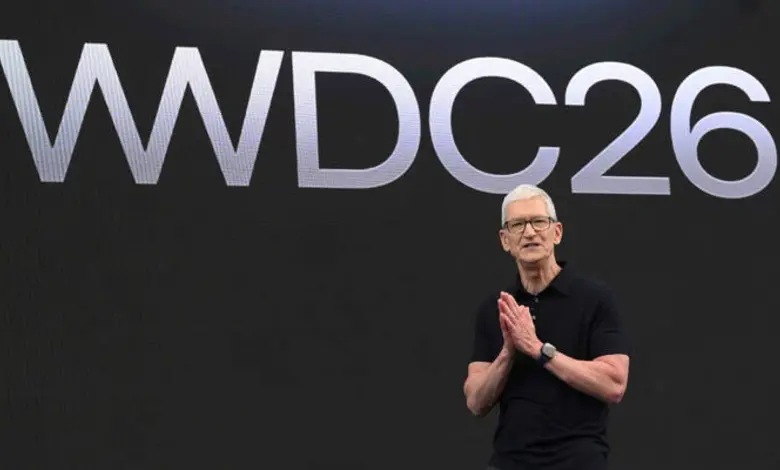
At its annual Worldwide Developers Conference (WWDC) in Cupertino, California, Apple unveiled a long-delayed, major overhaul of its virtual assistant, introducing “Siri AI.” This strategic move aims to close the immense gap with Big Tech rivals and new-age startups who have raced ahead in the artificial intelligence market. The update arrives after two years of repeated delays following Apple’s initial promises of an AI revamp.
The reinvented Siri AI marks a transition toward a more conversational assistant, complete with a new standalone app that automatically syncs and saves images and search history across Apple devices. Key features include deep on-screen awareness, allowing the assistant to analyze what a user is looking at and pull contextually relevant information directly from the web. Siri AI can also tap into personal context, easily locating unsaved details, such as an address mentioned deep within past messages or emails.
ALSO READ: Sensex Plunges Over 800 Points as Middle East Tensions and Global Pressures
This transformation represents Apple’s most intense effort yet to revive its voice assistant, which has struggled to keep pace with the rapid evolution of OpenAI’s ChatGPT, Anthropic’s Claude, and Google’s Gemini. While rivals are racing toward fully autonomous, “agentic” AI designed to execute complex operations, Apple’s National General Secretary of software engineering, Craig Federighi, emphasized a more grounded approach. He noted that some competitors are pursuing “AI for the sake of AI” and stated that Apple is focusing instead on practical features integrated directly into everyday tasks.



Despite the monumental announcement, market and analyst reactions remain measured, with Apple shares closing 1.9% lower following the keynote. Furthermore, massive regulatory roadblocks have emerged. Due to stringent privacy and security concerns surrounding system-level data access, Apple announced that Siri AI will be indefinitely delayed on iPhones and iPads within the European Union, and remains unavailable in China. Additionally, market analysts warn that the upgrade faces a severe hardware bottleneck, as a vast majority of older, active iPhones lack the required chip architecture and processing memory to support the advanced Apple Intelligence infrastructure.