
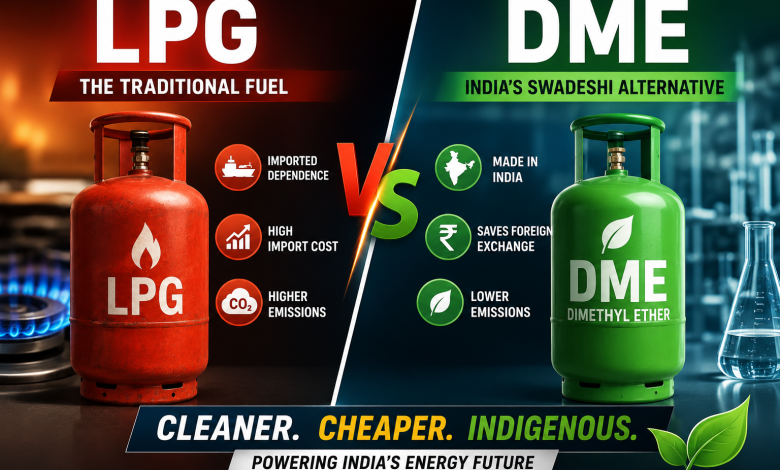
Pune: Millions of households across India depend on LPG cylinders for daily cooking needs, but the country continues to rely heavily on imported fuel supplies. In an effort to address this dependence, scientists at Pune’s CSIR-National Chemical Laboratory (CSIR-NCL) are developing Dimethyl Ether (DME), a cleaner fuel that could emerge as a domestic substitute for LPG.
According to the report published by The Economic Times citing ANI, researchers involved in the project believe DME could play a key role in strengthening India’s energy security because it can be produced locally using resources such as coal, biomass and methanol.
Scientists associated with the initiative described the project as part of India’s next-generation deep-tech innovation efforts. Dr T Raja, Chief Scientist at NCL, explained that DME shares many similarities with LPG and can be blended with propane and butane mixtures without significantly affecting its utility for domestic and industrial purposes.
Researchers also highlighted that the fuel has applications beyond household cooking. The technology could potentially be used in LPG-operated autorickshaws and may even replace diesel generators in certain situations. Project Scientist Samruddhi Mane stated that DME has the capacity to support multiple energy-related uses.



The transition, however, is expected to happen gradually. Scientists said the initial plan involves blending 20 percent DME with 80 percent LPG. One major advantage of the approach is that consumers may not be required to replace existing cylinders, burners or stoves.
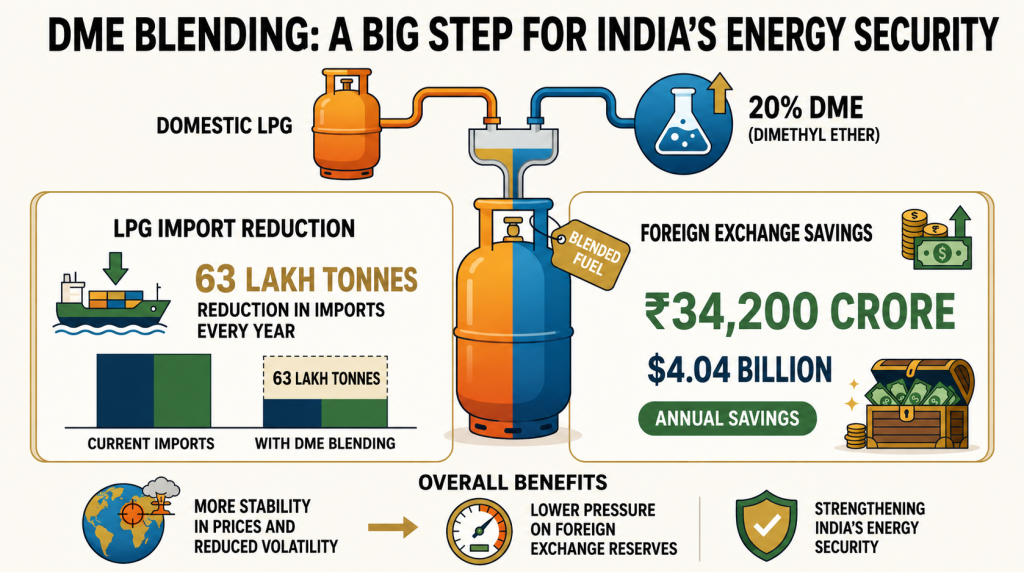
Project Scientist Akash Bhatkar noted that even a 20 percent blend could substantially reduce LPG imports and help India save foreign exchange reserves spent on fuel purchases. Earlier reports by The Economic Times also stated that researchers are working to scale up pilot projects related to DME production.
Young researchers working on the project described the initiative as an important contribution toward the country’s future energy needs. Project associate Sheetal Gawli said the work carried significance beyond scientific experimentation, while researcher Aditi Kamble said the project had evolved into a larger energy-saving technology designed to benefit society.
As India continues exploring cleaner and more self-reliant energy solutions, the work underway at the Pune laboratory is being viewed as a significant step toward building a stronger indigenous fuel ecosystem and reducing dependence on imported LPG.