
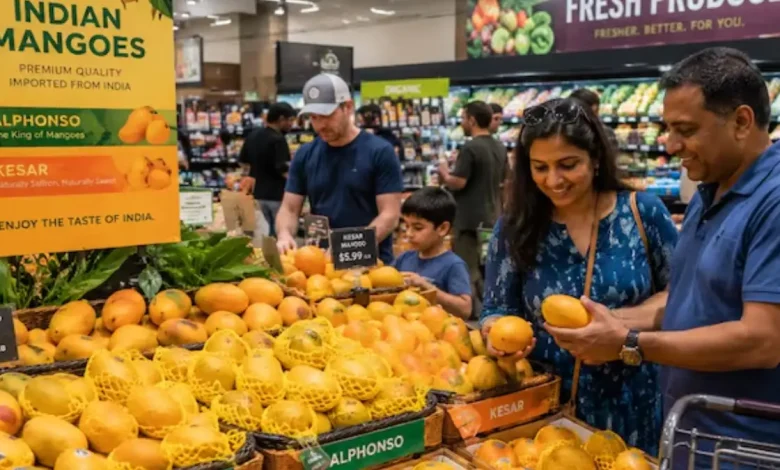
New York : Every summer, supermarket aisles across the United States witness a familiar rush — but this time, it is not for gadgets or limited-edition sneakers. It is for Indian mangoes. Varieties like Alphonso and Kesar are selling out rapidly in American stores, turning what was once a niche craving into a nationwide seasonal trend.
For years, these mangoes were mostly bought by Indians living abroad who missed the taste of home. Today, however, many Americans are also joining the craze. The rich flavour, natural sweetness, and unique aroma of Indian mangoes have helped them gain a loyal following far beyond the South Asian community.
Among the two famous varieties, Kesar mangoes are increasingly becoming the top choice in export markets. Traders say Kesar mangoes travel better, stay fresh for longer, and are easier to handle during shipping compared to Alphonso mangoes. As a result, exports of Kesar have grown sharply in recent years, especially to the United States, which is now one of the biggest buyers of Indian mangoes.
Demand has become so strong that many Indian grocery stores in cities like New York, Chicago, and San Francisco often sell out within hours of fresh stock arriving. Some customers even place advance bookings weeks before the mango season begins. Social media announcements about mango arrivals are now treated almost like product launches, with buyers rushing to reserve boxes before they disappear.




Getting these mangoes from Indian farms to American homes is not easy. Exported mangoes must pass strict quality checks, irradiation treatment, and inspection procedures before entering the U.S. market. They are usually transported by air to maintain freshness, making them expensive compared to local fruits. Even then, customers are willing to pay premium prices because of the taste and quality associated with Indian mangoes.
Despite challenges such as rising transport costs and strict import regulations, exporters believe demand will continue to rise. The popularity of Indian mangoes in the U.S. reflects not only the growing global appeal of Indian produce but also how food traditions can cross borders and create new markets.
What started as nostalgia for Indians abroad has now become a summer favourite for many Americans — proving that the love for a good mango needs no nationality.
Read Also : From King’s College Student To Britain’s Youngest Mayor: Who Is Tushar Kumar?