
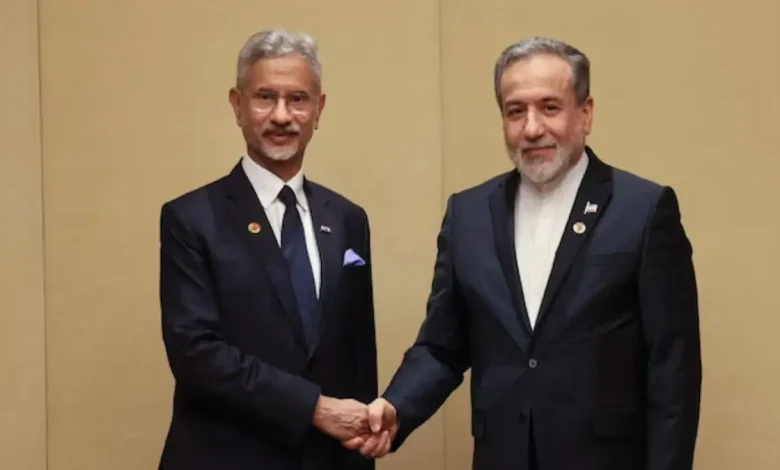
New Delhi: External Affairs Minister S. Jaishankar spoke with Iranian Foreign Minister Seyed Abbas Araghchi on Wednesday night, discussing bilateral matters and issues related to BRICS, in what was their fourth conversation since the current round of conflict between the United States, Israel, and Iran broke out.
Jaishankar confirmed the call on X. “Had another conversation with Iranian FM Seyed Abbas Araghchi yesterday night. Discussed bilateral matters as also BRICS related issues,” he wrote.
Earlier calls between the two ministers had focused on shipping safety and India’s energy security. Ministry of External Affairs Spokesperson Randhir Jaiswal addressed those discussions at a press briefing, saying the conversations centred on ensuring safe passage of ships and stable energy supplies through the region.
Spoke this evening to FM @araghchi of Iran. Conveyed greetings for Navroz and Eid.
Our conversation was on the latest developments regarding the conflict. And its implications for the larger region.— Dr. S. Jaishankar (@DrSJaishankar) March 21, 2026





“EAM and FM of Iran have had three conversations in the last few days. The last one discussed issues pertaining to safety of shipping and India’s energy security. Beyond that, it would be premature for me to say anything,” Jaiswal said.
On the military front, the Israeli Air Force announced it had completed multiple waves of strikes on Iranian infrastructure across Tehran, Shiraz, and Ahvaz simultaneously.
In Shiraz, the IAF said it struck an underground facility used for the production and storage of ballistic missiles. In Tehran, it targeted sites and a central base belonging to Iran’s air defence network. In Ahvaz, headquarters of what the IAF described as various regime bodies were hit, with the military stating that dozens of soldiers had been operating from those locations to plan and execute attacks against Israel and other countries in the region.
“The completed strikes are part of the phase of deepening the damage to the core arrays of the Iranian terror regime and its foundations,” the IAF said in its statement.
The conflict entered its 14th day with the exchange of fire continuing. Tensions across West Asia escalated sharply after joint US-Israeli military operations resulted in the death of Iran’s former Supreme Leader, Ayatollah Ali Khamenei, on February 28. Iran responded by targeting Israeli and US assets across several Gulf countries, disrupting key shipping routes and affecting global energy markets. Iran has also threatened to close the Strait of Hormuz, a move that would directly impact energy supplies for multiple nations.