
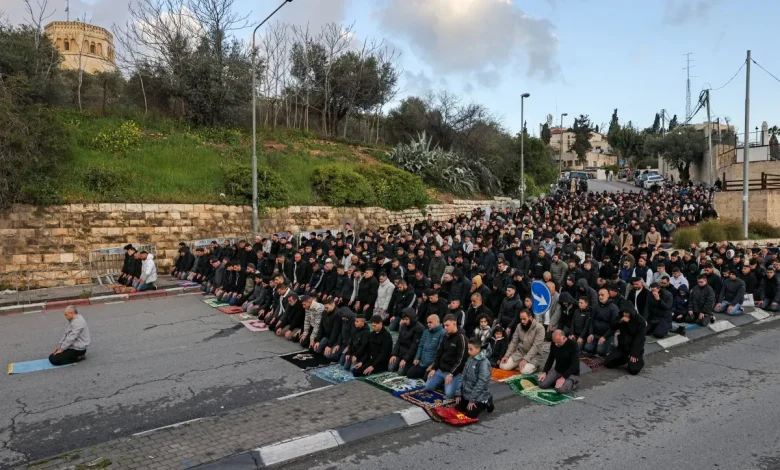
Hundreds of Muslim worshippers gathered outside the locked gates of Jerusalem’s Old City on Friday, March 20, to offer Eid prayers on the streets barred from the mosque they had come to reach.
Israel has kept Al-Aqsa Mosque, the Church of the Holy Sepulchre, and the Western Wall off-limits since it and the United States launched strikes on Iran on February 28. The government cited security concerns. For Palestinians in Jerusalem, it meant celebrating the end of Ramzan cut off from their holiest site.
Wajdi Mohammed Shweiki, a Palestinian man in his 60s, told AFP: “Today, Al-Aqsa has been taken from us. It’s a sad and painful Ramzan.” He added that it was “a catastrophic situation for the inhabitants of Jerusalem, for Palestinians in general and for all Muslims across the globe.”
According to researchers, this is the first time Al-Aqsa Islam’s third holiest site has been closed during the final ten days of Ramzan since 1967.



Police capped public gatherings at fewer than 50 people nationwide as Iranian missile attacks kept tensions high. Shrapnel reportedly struck the Old City, a detail that did little to calm nerves in one of the world’s most densely packed religious neighbourhoods.
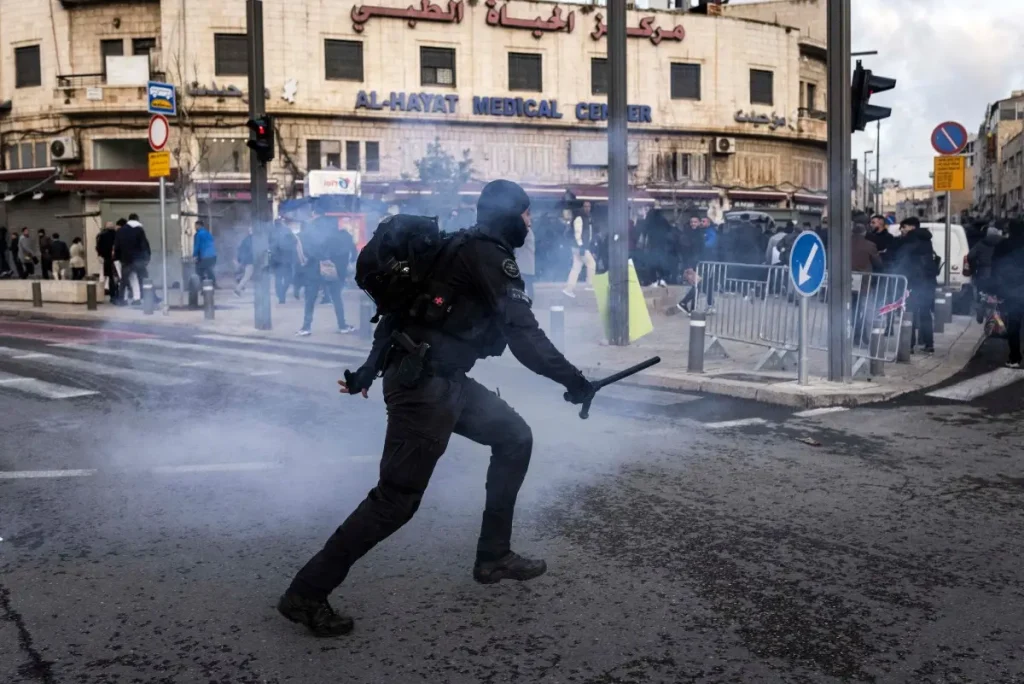
Not everyone prayed quietly. Some in the crowd pushed toward the city gates. Police responded with kicks, slaps to the head, and tear gas, deployed at least twice as clashes broke out.
For many who had traveled to pray at Al-Aqsa, the closure carried a particular weight. Worshippers described the experience as a “broken heart” faith and grief colliding on one of Islam’s most sacred days.