
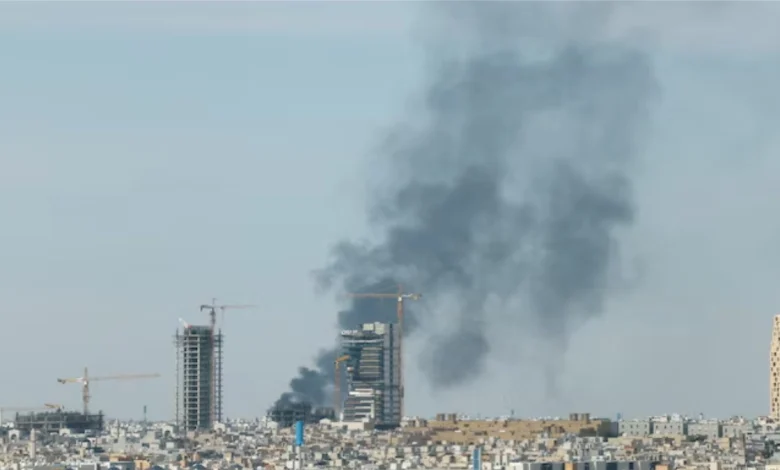
The regional crisis, triggered on February 28 by coordinated US and Israeli attacks on Iran, has drawn in Saudi Arabia, Bahrain, the UAE, Kuwait, Qatar, and others. Iranian forces have launched missiles and drones targeting areas hosting US military assets and allied infrastructure, prompting defensive interceptions and sporadic damage.
In Saudi Arabia, authorities reported the kingdom’s first war-related fatalities when a projectile struck a residential facility in Al-Kharj, south of Riyadh. The incident killed two workers—one Indian and one Bangladeshi—and injured at least 12 other Bangladeshi nationals, severely damaging the building housing a maintenance and cleaning company. Saudi Arabia’s Foreign Ministry condemned the Iranian aggression against Gulf and Arab states as “unacceptable,” asserting Riyadh’s right to take all necessary measures to safeguard its sovereignty and citizens.
The UAE’s National Emergency Crisis and Disaster Management Authority announced that air defence systems were actively responding to a missile threat early Monday, amid reports of Iranian strikes across the Gulf.
Bahrain faced an Iranian drone attack on Sitra island, injuring several people—including one seriously—and damaging homes, according to the interior ministry and AFP journalists. Iran’s health ministry later reported 32 civilians injured in the incident.


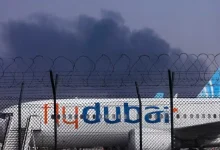
Explosions rocked parts of Kuwait and Qatar, with Qatar—home to a major US air base—among locations hit. In Iraq, rockets and drones targeted a US diplomatic facility near Baghdad International Airport, though defences intercepted the projectiles.
ALSO READ : Explosion in U.S. Embassy in Oslo: Minor Damage Reported
In Tehran, Israeli airstrikes hit four fuel storage facilities, igniting massive fires, producing thick black smoke, and causing explosions that spread to nearby Karaj. Iran’s oil distribution company confirmed four employees killed, with the odour of burning fuel permeating the city. Iran’s Revolutionary Guard Corps (IRGC) accused the US and Israel of targeting civilians and warned that if neighbouring countries tolerated attacks on Iranian energy sites, they could face strikes on their own oil facilities—threatening oil prices exceeding $200 per barrel.
Under new Supreme Leader Mojtaba Khamenei—appointed by the Assembly of Experts to succeed his father, Ayatollah Ali Khamenei, killed in the initial strikes—Iran launched missiles toward Israel, some inscribed with loyalty slogans to the new leader. State television broadcast the appointment amid vows of no hesitation against US and Israeli “aggression.”
In Lebanon, an Israeli drone strike in Beirut targeted senior Quds Force commanders, killing four and bringing total deaths from Israeli actions there to 394, per the health ministry. A loud explosion echoed in Beirut’s southern suburbs, a Hezbollah stronghold.
The IRGC pledged allegiance to Mojtaba Khamenei, while Yemen’s Houthi rebels welcomed his rise as a setback for adversaries.
Global repercussions intensified, with crude oil prices surging—Brent up around 26-30%—and Asian stock markets plunging sharply. US President Donald Trump described the oil spike as a “small price to pay” for neutralizing Iran’s nuclear threat.
The US ordered non-emergency personnel and families to depart Saudi Arabia, cited safety concerns. A US service member died from injuries in an earlier Iran-linked attack, marking the seventh American military fatality in the operation.
Casualty estimates from Al Jazeera include around 1,332 killed in Iran, at least 11 in Israel, six US soldiers, and nine in Gulf countries. The conflict shows no signs of abating, with threats of further escalation hanging over energy infrastructure and regional stability.