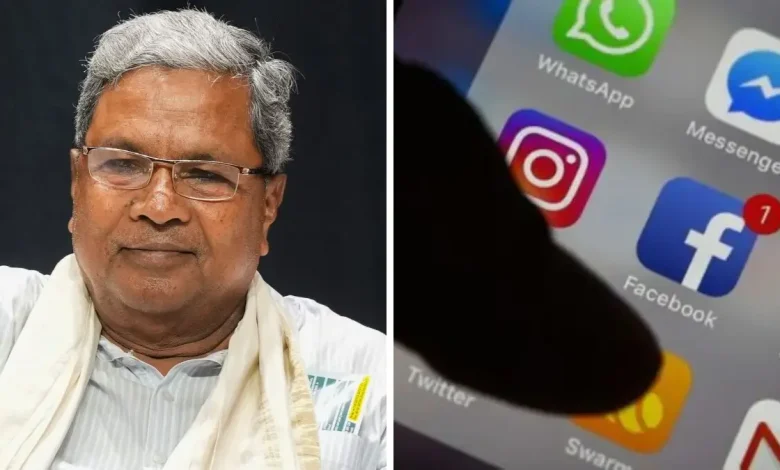
Banglore : Karnataka will ban social media for children below the age of 16 years, Chief Minister Siddaramaiah said on Friday. The move makes Karnataka the first state in the country to make the most definitive announcement on the topic of barring social media use among children. Andhra Pradesh and Goa are two other states to have previously said that they are considering similar moves.
State IT and Biotechnology Minister Priyank Kharge had told the Assembly earlier this year that the government was examining possible measures to ensure responsible use of artificial intelligence and social media among young users. Health Minister Dinesh Gundu Rao had also expressed concerns about the impact of excessive screen exposure on children. BJP MLA and former minister Suresh Kumar had urged the government to take the issue seriously, warning that unregulated social media exposure could harm both education and family environments.
Karnataka’s move comes amid a growing global debate on regulating children’s access to social media. Several countries have already begun experimenting with restrictions. Australia has introduced strict measures limiting social media access for younger users, while the United Kingdom and Finland have also been discussing similar safeguards. Cybersecurity experts warn that children and teenagers often share personal information online without fully understanding privacy risks.
Artificial intelligence has added a new dimension to these risks. AI-powered chatbots and recommendation algorithms can keep children engaged for long periods while also collecting sensitive behavioural data. In some cases, experts say such systems may unintentionally expose minors to harmful content or enable new forms of manipulation. At the same time, technology is not only a source of risk. For many young people, social media and digital platforms also provide access to learning resources, coding communities, creative opportunities and even early entrepreneurial ventures.




Because of this dual nature, experts say blanket bans may be difficult to enforce and could push young users towards unregulated platforms, virtual private networks (VPNs) or hidden accounts that are harder for parents and authorities to monitor. Many policymakers are therefore exploring a middle path — combining age-based safeguards, stronger privacy protections, parental controls and digital literacy programmes rather than relying solely on prohibitions.
Read Also : Two IAF Pilots Perish in Sukhoi Su-30MKI Crash During Training Flight in Assam