
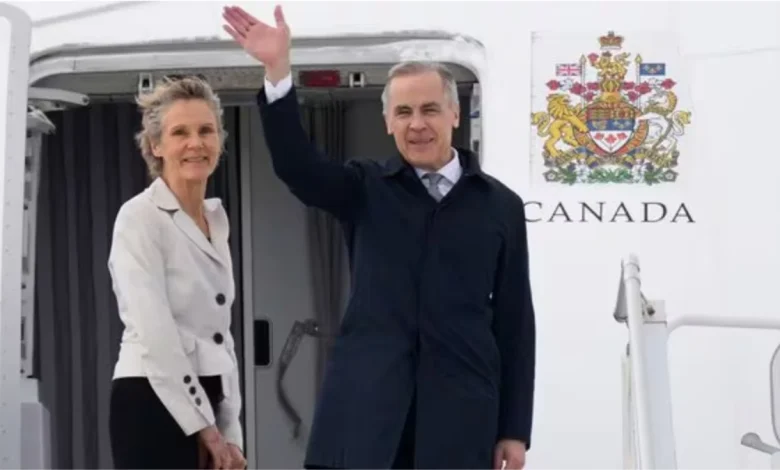
Mumbai: Canadian Prime Minister Mark Carney touched down in Mumbai on Friday, launching his first official visit to India a four-day trip set to run until March 2 with rebuilding bilateral relations and expanding trade firmly at the top of his agenda.
The visit comes as Canada actively seeks to offset the strain in its relationship with the United States and forge deeper economic partnerships with countries including India, China, and nations across the Middle East. Following his arrival in Mumbai, Carney is expected to meet with business leaders before heading to New Delhi, where he is scheduled to hold talks with Prime Minister Narendra Modi on Monday, according to AFP.
Ties between India and Canada had deteriorated sharply in recent years after former Prime Minister Justin Trudeau alleged Indian involvement in the killing of a Canadian citizen allegations that New Delhi has consistently and firmly denied. In a notable departure from his predecessor, Carney will not visit Punjab, a region closely associated with Sikh separatist politics. Analysts, citing a Reuters report, view the decision as a deliberate effort to avoid friction with Indian authorities.




Experts have described Carney’s overall approach as reflecting a more pragmatic foreign policy orientation one shaped in part by tensions with Washington stemming from Donald Trump’s tariff actions and annexation threats. Business leaders have characterised the trip as squarely focused on trade and investment rather than symbolic gestures.
The visit also comes on the heels of a recently concluded trade agreement between India and the European Union, fuelling hopes that a similar deal with Canada could be within reach. Indian officials have previously signalled that discussions could encompass a long-term uranium supply agreement, along with smaller-scale arrangements in areas such as energy, artificial intelligence, education, and culture, as noted in the Reuters report.
Following his India engagements, Carney is slated to travel to Australia and Japan — part of a broader diplomatic push to reduce Canada’s reliance on the United States and diversify its trade relationships by strengthening ties with what he has referred to as “middle-power” economies.
(With inputs from agencies)