
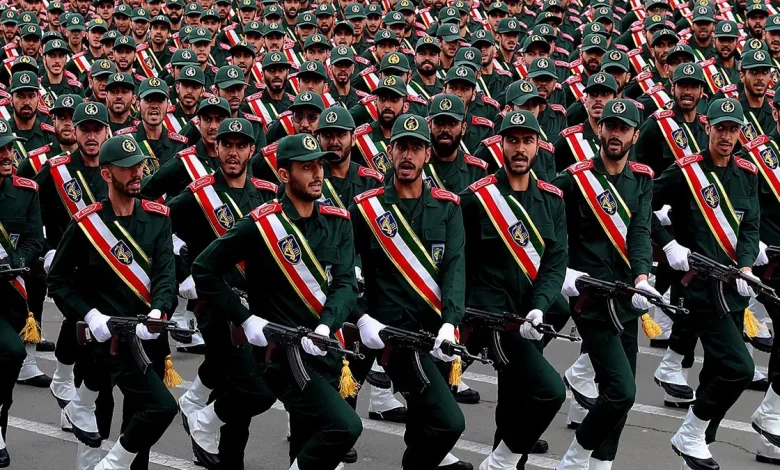
The European Union has formally agreed to designate Iran’s Islamic Revolutionary Guard Corps (IRGC) as a terrorist organization, delivering a significant political condemnation of Tehran for its brutal crackdown on demonstrators. The unanimous decision was reached by EU foreign ministers on Thursday, January 29, during discussions in Brussels, paving the way for official implementation in the days ahead.
When the designation takes effect, it will enforce an asset freeze, prohibit financial assistance, and impose travel restrictions on all serving IRGC members, though many are already subject to sanctions under current EU regulations. EU foreign policy chief Kaja Kallas stated the action was prompted by extreme repression, emphasizing that governments that kill their own people will ultimately face repercussions. The agreement came after France and Spain reversed their earlier hesitation, with Belgium similarly moving to support the measure. French Foreign Minister Jean-Noel Barrot demanded a halt to executions, the freeing of political prisoners, and the reinstatement of internet connectivity in Iran.
Also Read: The Mother Of All Deals : EU, Canada Gave Middle Finger To Trump With India Deals
He further called on Iranian officials to permit two French citizens currently taking refuge at the French embassy in Tehran to depart the country. The IRGC stands accused of orchestrating violent crackdowns on protesters, providing weapons to Russia, launching missiles at Israel, and backing armed organizations, including Hezbollah, Hamas, and Yemen’s Houthi movement. The United States, Canada, and Australia are among several nations that have already classified the IRGC as a terrorist organization. Germany and the Netherlands have consistently advocated for the EU to adopt the same stance. The EU’s terrorism blacklist presently features 22 organizations, including Hamas, Hezbollah’s military wing, and the Kurdistan Workers’ Party.

Established in 1979 following the Iranian Revolution, the Islamic Revolutionary Guard Corps (IRGC) was formed to protect the Islamic Republic and quell potential rebellions. Since then, it has dramatically broadened its power, penetrating Iran’s political, economic, and social domains, and has essentially transformed into a “state within a state.”