
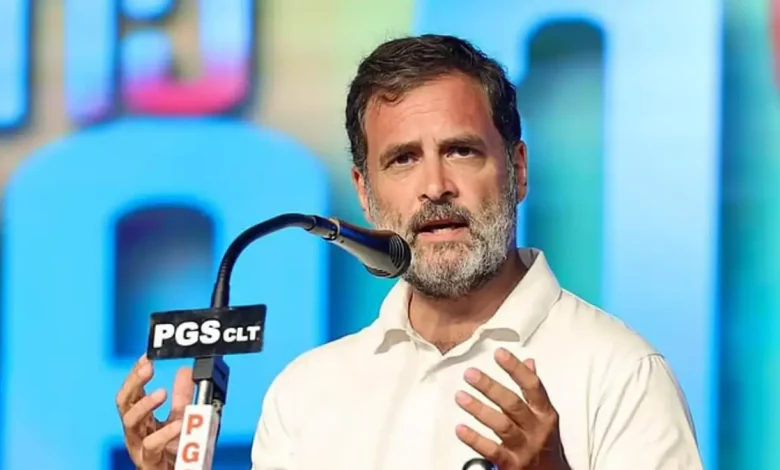
New Delhi : Congress leader Rahul Gandhi on Tuesday strongly criticised the Information and Broadcasting Ministry over its move to block the Tamil film Jana Nayagan, calling it an “attack on Tamil culture” and asserting that the Centre cannot silence the voice of the Tamil people. In a pointed message addressed to Prime Minister Narendra Modi, Gandhi said such actions reflect an attempt to suppress cultural expression and warned that the government would “never succeed” in stifling Tamil identity and democratic voices.
The controversy surrounding Jana Nayagan erupted after the Ministry of Information and Broadcasting reportedly initiated steps to block or withhold clearance for the Tamil film, citing concerns related to certification norms and content guidelines. While official details from the Centre remain limited, sources indicate that objections were raised over the film’s political undertones and its alleged parallels with contemporary governance and power structures.
Jana Nayagan, which translates to “Leader of the People,” has been widely discussed in Tamil Nadu for its narrative rooted in social justice, political accountability and mass leadership. Even before its release, the film drew attention for what supporters describe as its bold storytelling and cultural resonance with Tamil political history. Critics of the government’s move argue that the attempt to block the film amounts to censorship and undermines artistic freedom, especially in a state where cinema has long played a key role in political discourse.
The issue quickly escalated beyond the film industry, drawing reactions from opposition leaders and civil society groups. Congress leader Rahul Gandhi weighed in on the matter, calling the alleged blocking of Jana Nayagan an attack on Tamil culture and asserting that the Centre would not succeed in silencing the voice of the Tamil people. His remarks have added a sharp political edge to the debate, framing it as a larger question of federalism, cultural autonomy and freedom of expression.



The Centre, on its part, has not issued a detailed public response addressing the allegations of cultural suppression. However, government sources have maintained that any action taken against the film follows existing laws and regulatory mechanisms, including the Cinematograph Act and certification guidelines. As reactions continue to pour in, the Jana Nayagan row has become emblematic of the ongoing tension between creative expression, political narratives and state regulation in Indian cinema.
Read Also : Blinkit Drops 10 Minute Delivery Branding After Centre Steps In Over Gig Workers’ Strike