
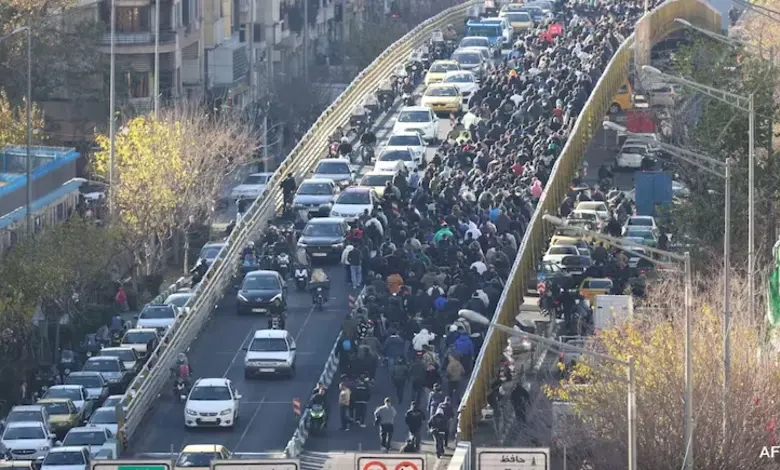
Tehran — University students in Iran took to the streets on Tuesday in multiple cities, extending protests sparked by a deepening economic downturn that has devalued the national currency and driven up living costs.
According to Ilna, a news agency linked to Iran’s labor movement, demonstrations occurred at 10 universities nationwide, including seven prominent institutions in Tehran. State-run IRNA and Ilna also reported protests at the technology university in Isfahan, as well as campuses in Yazd and Zanjan.
The student actions followed Monday’s demonstrations by shopkeepers in central Tehran, who voiced frustration over soaring import prices. Security forces and riot police were visible at key intersections and near universities in the capital, AFP journalists observed, though many shops shuttered the previous day had reopened.
The unrest coincides with planned temporary closures of banks, schools, and businesses across most provinces to conserve energy amid freezing temperatures.

ALSO READ : Massive Protests Break Out In Iran, Is There Trump Angle?
Iran’s rial has plummeted, with the U.S. dollar reaching approximately 1.42 million rials when protests began on Sunday — up from 820,000 rials a year earlier — inflating costs for imported goods and impacting traders.
Initial demonstrations started Sunday at Tehran’s main mobile phone market and remained contained in the capital’s center, with most businesses elsewhere operating normally.
President Masoud Pezeshkian, whose powers are limited compared to Supreme Leader Ayatollah Ali Khamenei, met labor leaders on Tuesday and outlined steps to address the crisis, per the Mehr news agency. In a social media statement, he directed the interior minister to engage protesters’ representatives and resolve issues responsibly.
Parliamentary speaker Mohammad Bagher Ghalibaf urged measures to boost purchasing power but cautioned against exploitation by foreign agents or opponents, state television reported.
The government also announced the appointment of former economy minister Abdolnasser Hemmati as central bank governor.
Traders have reported stalled sales of imported items due to price volatility, with buyers and sellers waiting for stability, AFP correspondents noted. One anonymous merchant told Etemad newspaper that authorities provided no assistance amid rising costs, forcing the protests.
Official figures show December inflation at 52 percent annually, though many essentials have risen far more.
Long-term Western sanctions have strained Iran’s economy, worsened by the United Nations’ late-September reinstatement of nuclear-related measures lifted a decade ago. Western nations and Israel allege Iran pursues nuclear weapons, which Tehran rejects.
These cost-of-living protests fall short of the 2022 nationwide unrest triggered by Mahsa Amini’s death in custody or the 2019 demonstrations over fuel price hikes.