
Bangladesh Sees Escalating Anti-India Protests as Student Leader Issues Violent Threat Against Delhi
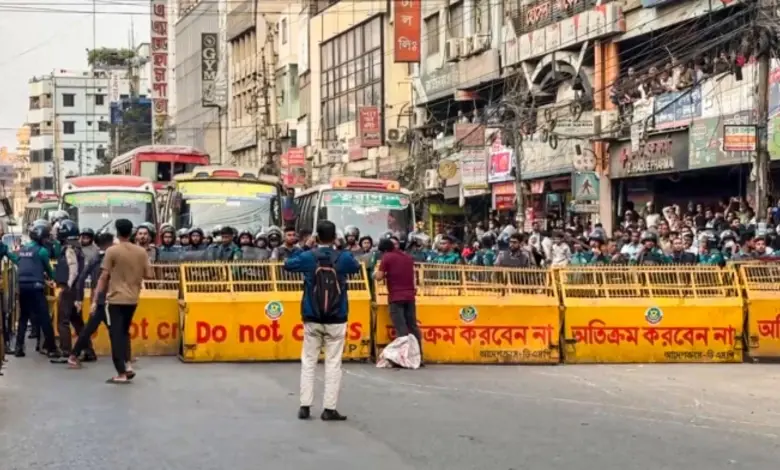
New Delhi: Protests against India persisted in Bangladesh on Thursday, leading to the temporary closure of an Indian mission in Rajshahi and services at two visa application centers, amid heightened tensions following inflammatory remarks from a prominent student leader.
The demonstrations followed a day after India summoned Bangladesh’s High Commissioner Riaz Hamidullah and delivered a strong demarche in response to threats against Indian diplomatic facilities.
Hasnat Abdullah, a former student leader and member of the National Citizen Party (NCP)—formed by participants in the July 2024 uprising that ousted Sheikh Hasina—addressed a rally in Dhaka on Wednesday. He declared, “Once we win and reach Parliament, we will behead Delhi and send it back.” Abdullah accused India of sheltering the former prime minister, harboring around 30,000 Awami League workers, training terrorists, and interfering in Bangladesh’s political affairs.
Student-led groups have organized multiple rallies in recent days, focusing anti-India sentiment ahead of Bangladesh’s elections scheduled for February 12. A Wednesday protest by July Oikya demanded the extradition of Hasina and other fugitive Awami League leaders believed to be in India.



ALSO READ : Bangladesh Gripped by Violence After Student Leader’s Death Sparks Anti-India
On Thursday, protesters under the banner of July 36 Manch marched toward the Assistant Indian High Commission in Rajshahi, tying national flags around their heads and chanting anti-India slogans, including calls to “Follow Babar’s path, free the Seven Sisters,” referring to India’s northeastern states. Police barricades halted the march about 100 yards from the mission, but demonstrators staged a sit-in after partially removing obstacles.
In response, the Indian Visa Application Center (IVAC) in Bangladesh announced the closure of its centers in Rajshahi and Khulna for the day, rescheduling appointments.
Abdullah’s speech also criticized India for border incidents and alleged narrative manipulation through media to foster dependency. He invoked historical figures like Muhammad bin Qasim to inspire resistance, warning of ongoing opposition to perceived interference.
The unrest has been linked to the recent shooting of Sharif Osman Hadi, a spokesperson for Inqilab Mancha and independent candidate, with some in Bangladesh claiming attackers fled to India—allegations rejected by New Delhi. NCP convenor Nahid Islam described the incident as an attack on the July Revolution, accusing Awami League elements of operating from exile with Indian support.
Bangladesh’s foreign ministry requested India to prevent suspects from entering its territory and to extradite any who had. The Ministry of External Affairs (MEA) in India stated that the country has never permitted its soil to be used against Bangladesh’s interests.