

The alleged suicide of a 19-year-old college student, following a beating on a Mumbai commuter train over his use of Hindi, has unleashed a fierce political backlash. Long-simmering language disputes, intensified by packed journeys and regionalist fervor, are erupting on the city’s vital suburban rail lines, prompting widespread protests and sharp partisan exchanges.
In recent weeks, everyday struggles for standing room on Mumbai’s suburban railways—carrying nearly 70 lakh passengers daily—have escalated into bitter conflicts centered on linguistic divides. This comes soon after a heated “Hindi versus Marathi” controversy erupted over the Maharashtra government’s short-lived mandate to introduce Hindi as a required subject in primary schools, an episode that now appears linked to the young man’s death.
Arnav Khaire, a first-year BSc student from Kalyan and a native Marathi speaker, took his own life on November 18. His family claims the incident stemmed from a violent confrontation on a local train, where fellow passengers attacked him for conversing in Hindi rather than Marathi. The emotional toll of the assault, they assert, proved unbearable. Though Khaire’s choice of language reflected the diverse fabric of Mumbai’s public transport, his passing has exposed how underlying resentments about regional tongues are spilling into volatile clashes amid the confined chaos of rush-hour trains, where patience quickly frays. As authorities investigate the claims, the tragedy has plunged Maharashtra into a major political uproar.
The BJP has staged rallies inside and outside Mumbai, condemning the Shiv Sena (UBT) and Raj Thackeray’s Maharashtra Navnirman Sena (MNS) for stoking linguistic animosity. Opposition leaders, however, insist the case must remain separate from broader backlash against perceived Hindi imposition. Violence targeting non-locals under the banner of protecting the “Marathi manoos” is a recurring theme in Mumbai’s political history, dating back to 1966 when Bal Thackeray founded the Shiv Sena. In more recent years, his nephew Raj has taken a hardline stance on Marathi pride and identity through the MNS, often directing ire at North Indians. Uddhav Thackeray, Bal’s son and Raj’s cousin, once appeared to soften this legacy during his 2019 alliance shift to the Maha Vikas Aghadi with Congress and the NCP, parting ways with the BJP.


This summer, the Devendra Fadnavis administration’s push to add Hindi as a third compulsory language from Class 1 in schools triggered outrage, reigniting debates on Marathi’s primacy. The Thackeray rivals united in a vocal anti-Hindi drive, yielding three key outcomes: the policy’s abrupt reversal, a resurgence of Marathi as a political rallying cry, and a rare collaboration between Uddhav and Raj to leverage the issue ahead of local body polls that kicked off on December 2.
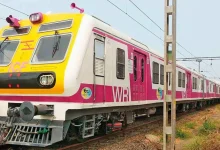
Surface-level harmony in this multicultural hub masks deeper undercurrents. Nativist groups lament Marathi families relocating to distant suburbs, alleging a displacement of locals from central Mumbai—a narrative that heightens electoral tensions and risks mobilizing young people toward aggression. The grueling daily grind, particularly from remote outskirts, serves as a breeding ground for such friction. Ridership figures reveal the strain: Central Railway handles 41 lakh passengers post-pandemic, down from 44 lakh, with 26 lakh on the main line—45% originating north of Thane in overcrowded hubs like Kalyan, Dombivli, Thakurli, Ambarnath, Badlapur, and Titwala. Western Railway logs 31 lakh daily, versus 35 lakh pre-Covid, with 30% from the Borivli-Virar stretch, amplifying bottlenecks in northern corridors.
Kailash Verma, vice-president of Maharashtra BJP’s railway wing, notes that onboard scuffles are longstanding but now amplified by smartphone videos shared online, creating an illusion of rising frequency. On language friction, he blames “foot soldiers” of defeated parties for harassing Hindi speakers as a diversionary tactic. Lata Argade of the Upnagariya Pravasi Maha Sangh attributes flare-ups to workplace burnout and unchecked overcrowding. “Commuters arrive stressed from jobs, and boarding often takes multiple tries amid surging crowds,” she explains. “Inside, it’s impossible to shift without contact, sparking inevitable disputes.” Post-Covid habits, like toting laptop bags and chargers, further complicate navigation, turning minor bumps into flashpoints—issues rarer on buses or in relaxed venues like parks.
ALSO READ : Thrashed for not speaking in Marathi, teen student ends life
A Kalyan-to-Bhandup commuter and professor describes language-based taunts as commonplace, especially from group travelers who challenge Hindi users with jabs like “Don’t you speak Marathi?” or “Why crowd us outsiders?” Most brush it off to avoid delays, but retorts can lead to brawls, rarely reported due to haste. Peak-hour Central line runs from Kalyan to Ghatkopar see the most incidents, where casual Hindi chats now draw demands for Marathi. Last week at Nalasopara, a video by Sunny Chavan went viral after he confronted a pusher replying in Hindi: “These things happen.” Chavan demanded Marathi; the man retorted, “Is knowing Marathi mandatory in Maharashtra?” His companion echoed, “So what if we don’t know it?”
A senior Government Railway Police official in Mumbai clarifies that FIRs require cognizable offenses; mere verbal spats escalate to assault charges under the Bharatiya Nyaya Sanhita only if injuries occur.
Academic Deepak Pawar, who spearheaded earlier anti-Hindi school protests, calls Khaire’s death tragic and urges justice for perpetrators. Yet he accuses the BJP of exploiting it pre-BMC elections to vilify Marathi advocates like MNS and Shiv Sena (UBT). “We’ve opposed violence, but the BJP paints us as villains,” he says. MNS’s Sandeep Deshpande cautions against conclusions based solely on the father’s account, pending police findings. “MNS reacts only to insults against Marathi, not random attacks,” he maintains. The BJP counters that Shiv Sena (UBT) and MNS rhetoric fostered the hostile climate enabling the assault. Congress labels the BJP the chief polarizer, while Eknath Shinde’s Shiv Sena—aligned with BJP—stresses Marathi’s value while denouncing language-based hate. On Mumbai’s jammed locals, navigating this tightrope grows ever trickier.