
COLOMBO: Sri Lanka confronted the grim aftermath of cyclone Ditwah on Saturday, as President Anura Kumara Dissanayake proclaimed a nationwide state of emergency amid a climbing death toll of 153.
Colombo’s disaster management officials informed local newspapers that 191 individuals remain missing, with ongoing search and relief operations spanning 25 districts. The storm unleashed a torrent of landslides, flash floods, and relentless downpours, impacting more than 774,724 people across 217,263 households. Over 15,000 residences lay in ruins, forcing nearly 78,000 evacuees into makeshift shelters—a catastrophe etched as one of the island nation’s most severe in recent decades.
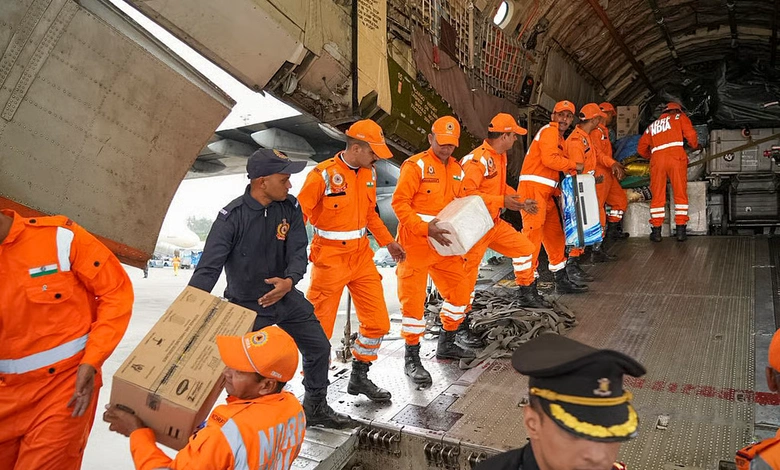
In a show of solidarity emblematic of its “neighbourhood first” policy, India swiftly intensified its aid campaign through Operation Sagar Bandhu. Late on November 28-29, Indian Air Force assets—a C-130 and an IL-76—lifted off from Hindon Air Base, ferrying 21 tonnes of vital supplies such as basic foodstuffs and emergency gear, plus a contingent of over 80 National Disaster Response Force members, straight to Colombo.


“India stands firmly with Sri Lanka in this hour of need,” the Indian Air Force affirmed via a post on X.
The Indian Navy complemented these efforts by airlifting essential provisions—encompassing 4.5 tonnes of non-perishable food, 2 tonnes of perishables, and other critical necessities—aboard vessels including INS Vikrant and INS Udaygiri.
Additionally, two Chetak helicopters from the INS Vikrant, crewed by Sri Lankan Air Force members, conducted vital search-and-rescue missions in the hardest-hit zones.
As recovery teams navigate the wreckage, the declaration of emergency aims to streamline aid distribution and bolster defenses against further risks, underscoring the profound human and infrastructural toll of Ditwah’s fury.